Marketing
Picsaurus vs SmugMug: Photography Gallery or Tour Guest Workflow?
SmugMug manages photography businesses. Picsaurus powers tour guest experiences. Which one fits your business?

.avif)
At first glance, Picsaurus and SmugMug appear to belong in the same category.
Both help businesses manage and share photos.
Both provide a way to deliver media after an experience.
Both help create value from visual content.
That's where the similarities start to fade.
The reality is that SmugMug and Picsaurus are designed for two very different types of customers.
SmugMug is built around photographers and wedding photography businesses. Its platform focuses on photo galleries, storage, client delivery, watermarking, protection tools, portfolio presentation, and photo gift sales. Picsaurus is built around tour operators and activity providers who want to share photos with guests, generate reviews, increase brand visibility, and create marketing value from those memories.
This comparison isn't really about features.
It's about understanding whether you're running a photography business or a tour business.
The answer to that question usually determines which platform makes more sense.
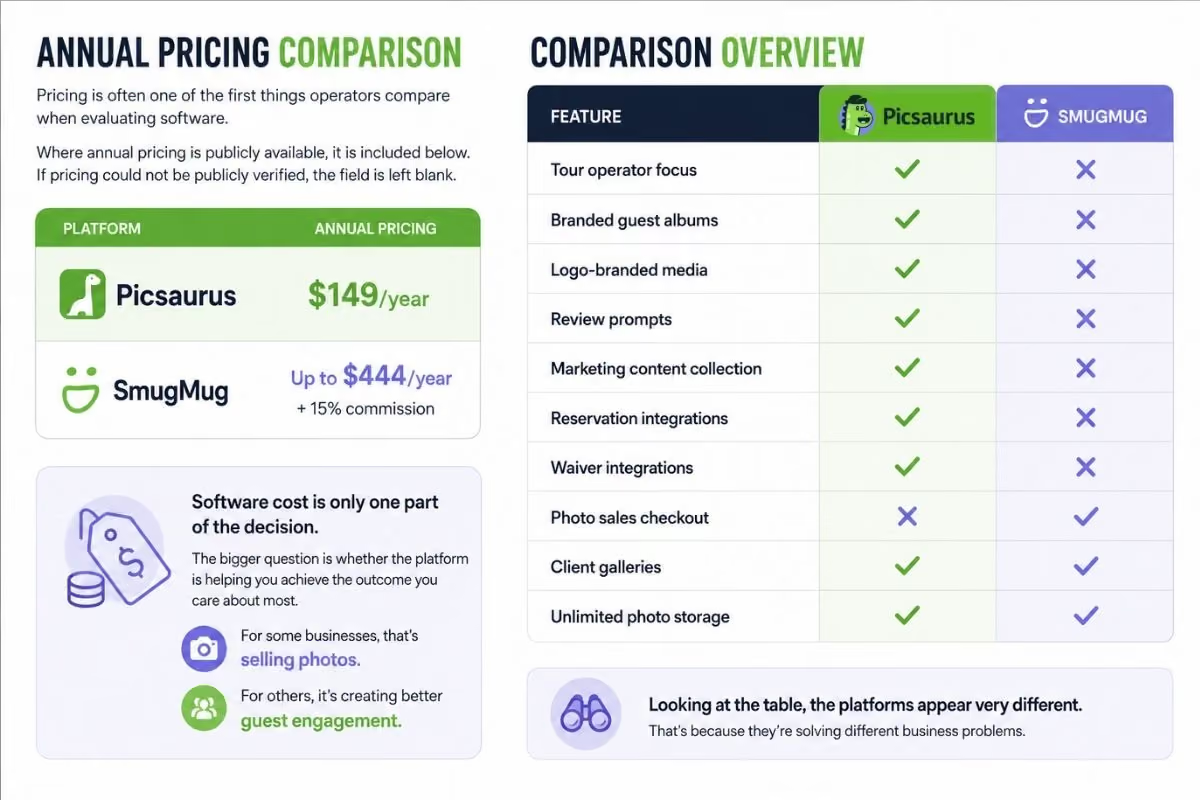
Key Takeaways
- Picsaurus and SmugMug both work with photos but serve different industries.
- SmugMug is primarily a photography business platform.
- Picsaurus is primarily a tour operator guest-sharing platform.
- SmugMug focuses on proof galleries, storage, delivery, and photo sales.
- Picsaurus focuses on guest engagement, reviews, branding, and marketing.
- The right choice depends on whether photos are your product or part of your guest experience.
- Tour operators and photographers often need different workflows even when they use similar media.
Comparing Picsaurus and SmugMug is a little like comparing a camera store and a tour guide.
Both care about photos.
Both help create memories.
But they serve very different purposes.
SmugMug is the stronger fit when photography itself is the business like wedding photography. If you need galleries, client delivery, sales tools, photo gifts, proofing, photography infrastructure, that's exactly what the platform was built for.
Picsaurus is the stronger fit when photos support a larger guest experience. If you want to deliver memories, encourage reviews, increase brand visibility, and create marketing value from every tour, Picsaurus aligns more closely with that goal.
The best choice isn't determined by which platform has more features.
It's determined by the job you're asking the platform to do.
1. Who Owns the Workflow?
The easiest way to understand this comparison is to ask who the platform was designed for.
SmugMug is built around professional photography businesses like wedding photographers.
The workflow assumes someone is managing a wedding party, sharing proof galleries, delivering images to clients, protecting content, and potentially selling photo gifts online. Everything revolves around supporting a professional photography business and helping photographers showcase and distribute their work.
Picsaurus starts from a completely different place.
The platform assumes the user is a tour operator.
The goal isn't to build a photography studio.
The goal is to help guests receive, share, and engage with memories from an experience while creating value for the operator through reviews, branding, and marketing opportunities.
Both workflows involve photos.
The businesses behind them are very different.
2. The Primary Outcome Is Different
Most software platforms are built around a core outcome.
Understanding that outcome helps explain everything else.
For SmugMug, the primary outcome is helping professional photography businesses manage, showcase, protect, and sell their work. Galleries, client delivery, storage, gifts and sales tools all support that objective.
For Picsaurus, the primary outcome is helping operators turn photo sharing into part of the guest experience and market their business.
The platform focuses on getting photos to guests quickly and easily, keeping the operator's brand attached to those photos, encouraging reviews, and helping businesses benefit from guest sharing.
One platform helps sell photography.
The other helps amplify experiences.
That's a meaningful distinction.
3. How Guests Experience the Photos
The moment guests access their photos is one of the biggest differences between the platforms.
In a photography business, clients often expect a proof gallery.
They browse images, review selections, make selections, the images get edited, and then they download the finished content or purchase photo gifts.
SmugMug excels at this process.
The gallery is the workflow.
Tour operators need something different.
Guests aren't looking for a professional photography portal.
They're looking for a simple way to relive an experience, download memories, share them with friends, and continue engaging with the business afterward.
For tour operators, the sharing experience often matters more than the gallery experience.
That's where Picsaurus focuses its attention.
4. Reviews and Marketing Create Additional Value
Many operators don't generate direct revenue from photos.
Instead, they use photos to generate future revenue.
A shared photo can lead to:
- A review
- A social media post
- A referral
- A repeat booking
- New marketing content
This is where Picsaurus begins to separate itself from photography-focused platforms.
The platform treats photo sharing as a marketing activity rather than simply a delivery activity. Branded albums, review opportunities, and content collection workflows help operators continue creating value long after a tour ends.
SmugMug isn't trying to solve that problem.
Its focus is helping photographers manage and monetize their work.
Again, neither approach is better.
They're simply designed for different goals.
5. Selling Photos vs Sharing Photos
This is often where operators make their decision.
Some businesses sell photos.
Others give them away.
A photography company may rely on image sales as a significant revenue stream.
For those businesses, SmugMug's galleries, sales tools, storage, and client delivery features are extremely valuable. Tour operators that sell photos will likely use PicThrive because it’s specifically built for them and their unique workflows.
Many tour operators use photos differently too.
Instead of selling media, they use it to create goodwill, encourage sharing, generate reviews, and strengthen customer relationships.
In those situations, the ability to distribute photos effectively often becomes more valuable than the ability to sell them.
That's where Picsaurus tends to be a better fit.
The platform is designed around sharing rather than selling.
6. Which Platform Fits Different Businesses?
The decision usually becomes straightforward once you identify your primary business model.
If your business revolves around wedding photography, client galleries, image delivery, and photo gift sales, SmugMug is likely the stronger option.
The platform was built specifically for that purpose.
If your business revolves around tours, activities, or experiences where photos support guest engagement and marketing, Picsaurus is generally the stronger fit.
The platform was built around the realities of tour operations and guest sharing.
Both platforms are excellent at what they're designed to do.
The key is choosing the one that aligns with your actual workflow.
Picsaurus Pros
- Built specifically for tour operators
- Branded guest albums
- Logo-branded media
- Review generation opportunities
- Marketing content collection
- Reservation and waiver integrations
- Designed around guest sharing workflows
Picsaurus Cons
- Not designed for photography businesses
- No dedicated photo sales checkout
- Less focused on portfolio management
SmugMug Pros
- Built for professional photography businesses
- Client gallery management
- Photo sales tools
- Watermark and content protection features
- Digital delivery infrastructure
- Proofing capabilities
- Strong storage capabilities
SmugMug Cons
- Not designed specifically for tour operators
- No tourism-focused integrations identified
- No review-focused workflow identified
- Less emphasis on guest sharing and marketing value
- Not integrated with reservation systems or digital waivers